Savannah cats
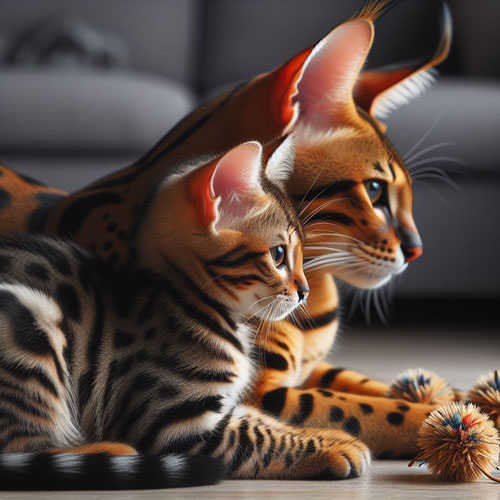
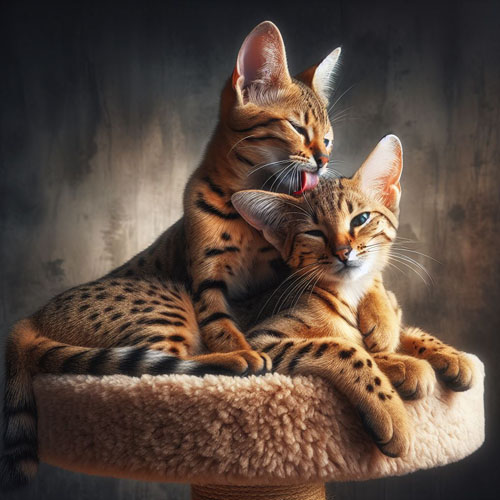
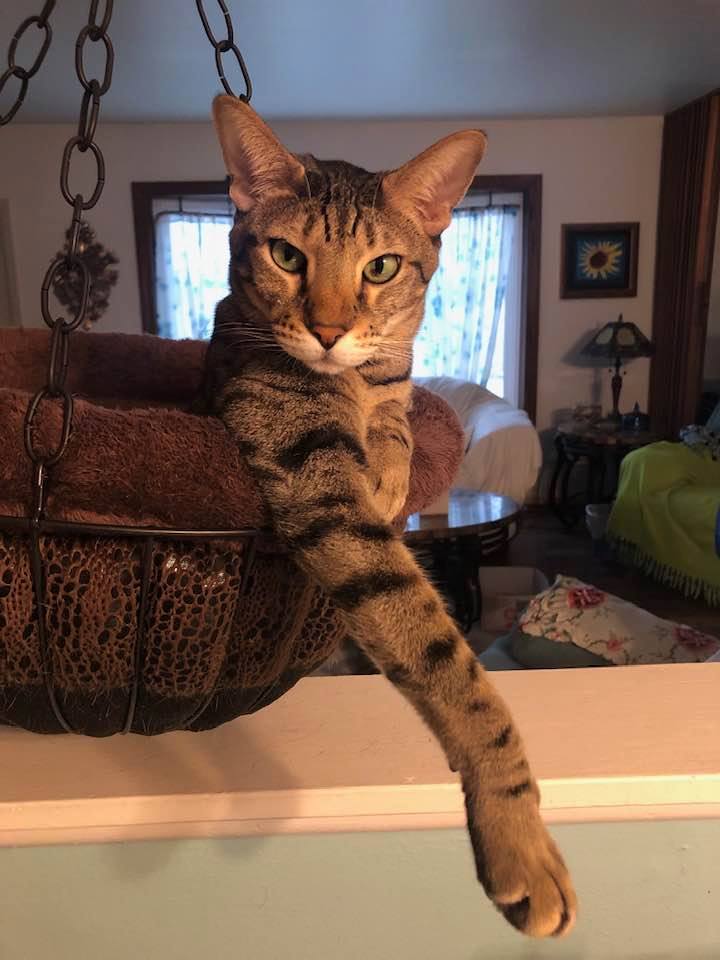
F2 Savannah cats Bubba & Alvin produced by F1hybrids
Savannah cat is a name given to the offspring of the domestic cat plus a serval - a medium-sized, large-eared wild African cat. The unusual cross became popular among breeders at the end of the Twentieth century, and in 2001 the International Cat Association accepted it as a new registered breed. Savannahs tend to be more social than typical domestic cats, and they are often when compared with dogs in their loyalty. Savannah cats can be trained to walk on a leash as well as taught to play fetch. Bengal breeder Judee Frank crossbred a male Serval, belonging to Suzi Woods, using a Siamese (domestic cat) to produce the first Savannah cat on April 7, 1986. Frank’s Savannah attracted the interest of Patrick Kelley, who purchased one of Savannah's kittens in 1989.
Patrick Kelley was among the first enthusiasts who worked towards establishing a brand new domestic breed based on a Serval/domestic cat crosses. He approached many Serval breeders to help in the creation of this new breed, and lastly garnered the help of breeder Joyce Sroufe to cooperate with him in taking the steps required to have the new breed recognized. In 1996, Patrick Kelley and Joyce Sroufe wrote the initial version of the Savannah breed standard, and presented it to the board of The International Cat Association (TICA). In 2001, the board accepted the breed for registration.
Savannah cats are considered to be one of the largest breeds of domesticated cats. The savannah's tall and slim build gives the appearance of greater size than their actual weight. Size is very influenced by generation and sex, with F1 hybrid male cats usually being the biggest. F1 hybrid and F2 hybrids are usually the largest, because of the stronger genetic influence from the African Serval ancestor. A female F1 Savannah Cat named "Scarlett's Magic," measuring 45.9 centimeters or 18.1 inches from shoulder foot, will be the tallest cat on earth, and measuring 108.5 centimeters or 42.7 inches from nose to tail, is the longest cat in the world, according to the Guinness Book of World Records as of August 20, 2010. Male Savannahs tend to be bigger than females. It's possible for early generation Savannahs to weigh up to 20 lbs.
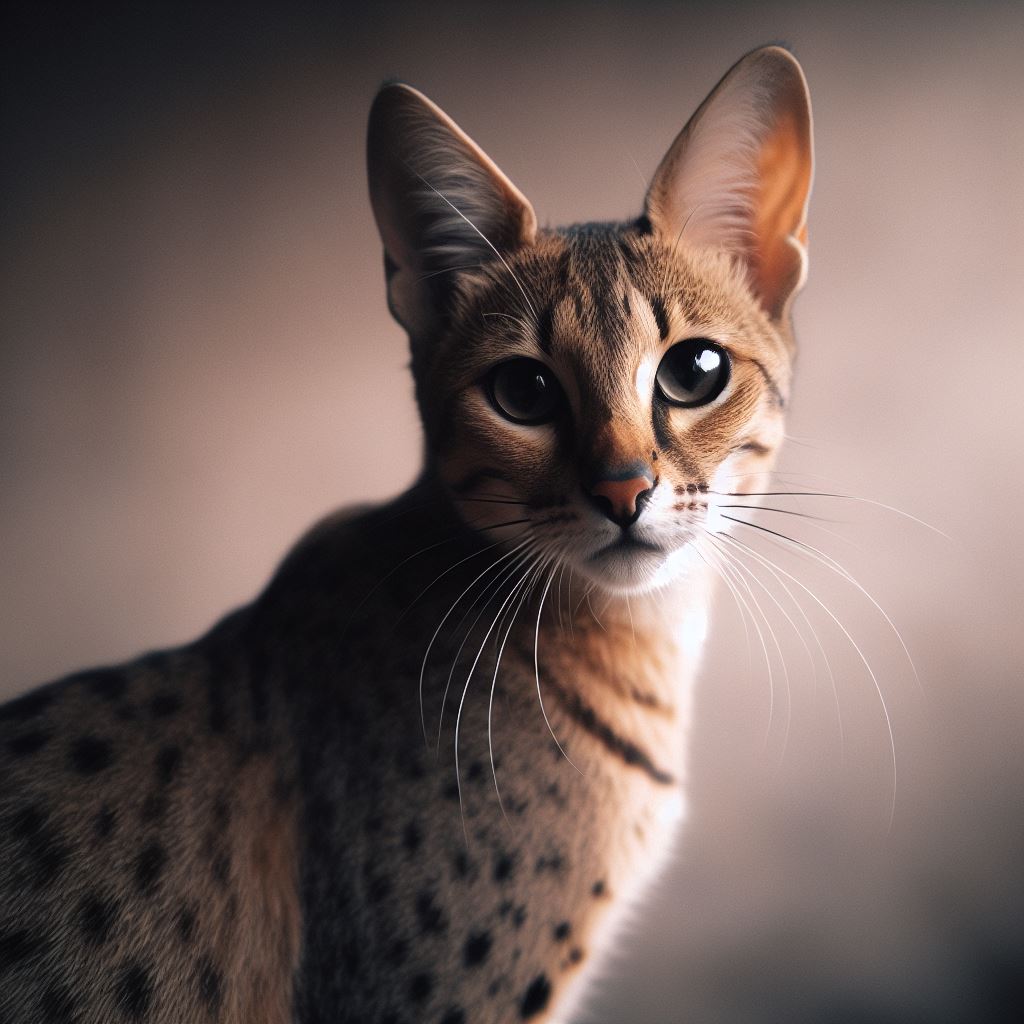
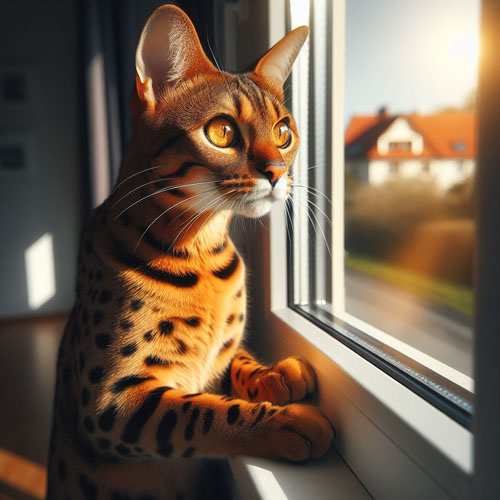
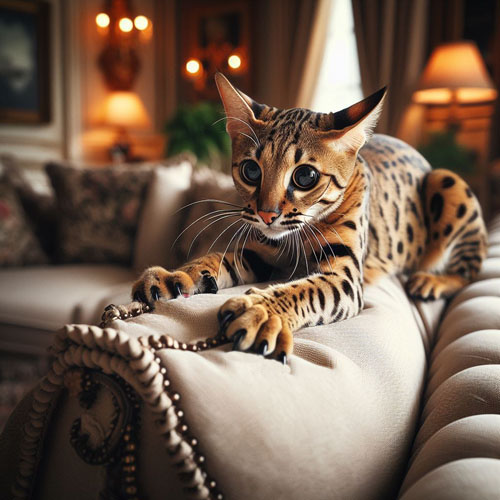
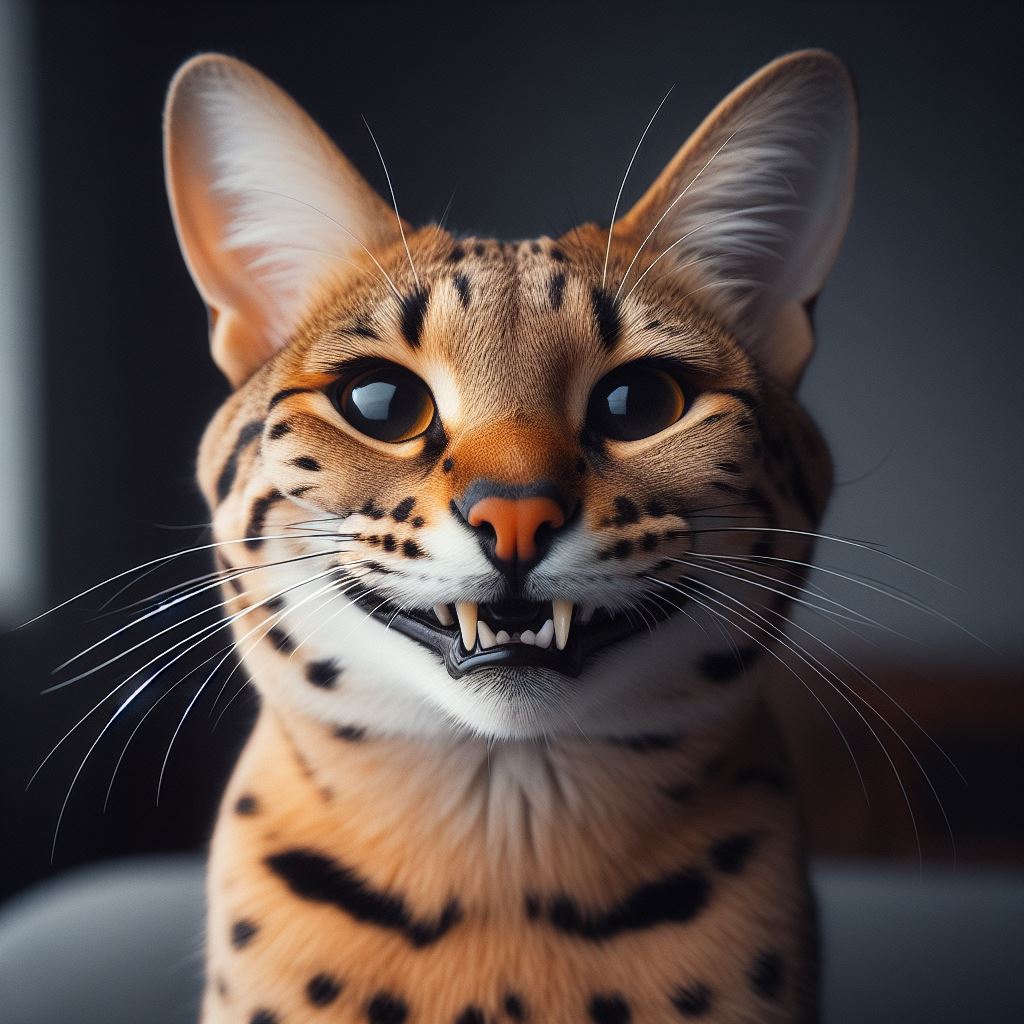
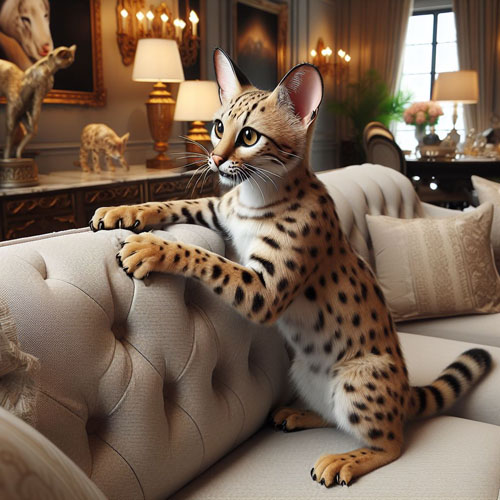
A Savannah's wild look is often due to the presence of numerous distinguishing Serval cat characteristics. Most prominent of these range from the various color markings, tall deeply-cupped wide rounded erect ears, long legs, fat black nose and black hooded eyes. The body of Savannah cat are long and leggy. If a Savannah is standing on their hind quarters are often higher than their shoulders. The tiny head is taller than wide, and they have a lengthy slender neck. The backs of the ears have ocelli. The short tail has black rings having a solid black tip. The eyes are blue as a kitten as in other cat and might be green, brown, gold or a blended shade as an adult. The eyes possess a "boomerang" shape having a hooded brow to protect them from harsh sunlight.
Cost of breeding cats
So you want to breed cats but need to know the cost of breeding cats? Well pull your pants up and get a deep pocketed check book out because I'm about to give it to straight from the horses mouth what the cost of breeding cats really is! If your a cat breeder you lucky to break even, period and no jokes. Now how can you make thousand of dollars off kitten sales and not make a good amount of money? Man, if only life was so simple. Fact is the live stock buisness is back breaking work all the animals have to be cared for correctly or you will suffer the consicuenses.
- Female cats: You queens are on average more money. Quality breeding females of any domestic breed of cat will cost any where from $1,000 and $10,000 dollars. The average savannah cat cost $4,000 for a proper qualtiy feline. The rarer the boodline or gentics the more you likely to pay.
- Male cats: A fetile male kitten will cost over $2,000. Most breeders end up with at least one or two unfertile males even if they should be fetile. Some males have been sold for over $8,000 by top breeders! When it comes to hybrids the sperm count can be lowered in males even past the F5 generation. Some outcrosses are more fertile than others.
- Serval cats: If you want an F1 program you going to need a serval cat. Get ready to seriously invest some money. When it comes to hybrids the sperm count can be lowered in males even past the F5 generation. Some outcrosses are more fertile than others.
Now that you actually buying the cat you need to keep in mind factors that can really affect you breeding carrer if you don't buy the right stock and some times even if you do!
- Fetility gaurentee: Most breeders are not going to give a fertility gaurentee. Keep in mind just because you want a cat to produce by being fertile does not mean they will be fetile. Some of the best show lines have low kitten production counts.
- Higher health risks: The more cats you have the more your at risk for illnesses and other related health risks. If one cat gets sick most of the time it will care on till the whole cattery is sick. Imagine having 15 sick cats! (It's not fun) You will quickly learn not to have to many. Such illnesses include Urinary Tract Infection, Feline Panleukopenia, FIP, feline distemper, low, white blood cell count, Kidney faliure, Chronic Kidney Failure, renal failure, Diabetes, FIP and so much more!
- Scams: The internet is full of classified websites with cats for sale by scammer. Those scams are just waiting to take you money, and large amount of money! When you looking to purchase breeders you should be VERY carful just like you should getting pets. You will find a scam using stolen pictures from ethical registered catteries, those catteries might not even be aware of the scam or stolen pictures. If you ever see a alc, margay, bobcat, ocelot, puma, cheetha at very cheap or low prices you should never contact that person. Many endangered species are marketed at these low prices to scam people trying to get black market items. The black market item will bite you in the bum!
- Wild blood: Wild or exotic blood also can be a factor in fertility. Such cats like margay or ocelot can not produce with domestic cat because first of they are an endangered species. Then you have getation diffrences that can care on to the hybrids, resulting in F1 females that can be harder to get live kittens from them then there exotic ansestors.
- TICA Codes: To add to the confusion of buying a pedigree papered cat you also need to look at the stud book number, TICA reistration codes and basically what the cat is going to be on paper! When dealing with hybrids you have felia generations that are the distance removed from wild ansestors.
So lets say you pay $2,000 for your female and you pay $2,000 for a male. For kicks lets say they come from line that produces on average 4 kittens in a litter, so you guessing you might get the same odds. So you have just invested $4,000 in cash twards two felines that might breed. Now you need all the cat supplies a breeder must have on hand. These cat supplies are your life line. Not having a medication on hand can cost you upwards of $1,000 or more should a breeding feline die due to lask of proper medical care.
Read more on Cost of breeding cats!